شهدت إيرلندا في منتصف القرن التاسع عشر واحدة من أسوأ الكوارث الإنسانية في تاريخها، عُرفت باسم المجاعة الكبرى (1845–1849). وقد نتجت هذه المأساة عن فشل محصول البطاطس، الذي كان الغذاء الأساسي لغالبية السكان، إضافة إلى السياسات الاقتصادية القاسية وسوء إدارة السلطات البريطانية التي كانت تحكم البلاد آنذاك. وأسفرت المجاعة عن وفاة أكثر من مليون شخص، فيما اضطر ملايين آخرون إلى الهجرة، ما خلّف جرحًا عميقًا في الذاكرة الإيرلندية استمر لعقود.
في خضم هذه الكارثة، برز موقف إنساني لافت من خارج أوروبا الغربية، تمثّل في مبادرة السلطان العثماني عبد المجيد الأول. فحين اطّلع على حجم المعاناة التي كان يعاني منها الشعب الإيرلندي، بادر إلى تقديم المساعدة دون اعتبارات سياسية أو دينية، في خطوة عكست البعد الإنساني للدولة العثمانية في تلك المرحلة التاريخية.
قرر السلطان في البداية التبرع بمبلغ 10,000 جنيه إسترليني لدعم المتضررين، إلا أن الحكومة البريطانية طلبت منه تقليص المبلغ إلى 1,000 جنيه إسترليني حتى لا يتجاوز قيمة التبرع الذي قدمته الملكة فيكتوريا. ورغم هذا القيد، لم تقتصر مبادرته على الدعم المالي، بل أمر أيضًا بإرسال ثلاث سفن محمّلة بالحبوب والمواد الغذائية إلى إيرلندا.
وبحسب الروايات التاريخية، واجهت السفن العثمانية محاولات لمنعها من الرسو في ميناء دبلن، لكنها تمكنت في نهاية المطاف من الوصول إلى ميناء دروغيدا، حيث جرى توزيع المساعدات على السكان الذين كانوا يعانون من الجوع الشديد. وقد أسهمت هذه المساعدات في التخفيف من معاناة الأهالي، وتركَت أثرًا إنسانيًا عميقًا في الذاكرة الجماعية الإيرلندية.
ولا تزال هذه المبادرة موضع تقدير في إيرلندا حتى اليوم، إذ يُذكر اسم السلطان عبد المجيد الأول باحترام، كما يظهر الهلال والنجمة العثمانيان في شعار نادي كرة القدم بمدينة دروغيدا، تخليدًا لتلك اللفتة الإنسانية النادرة.
وتجسّد هذه القصة مثالًا بارزًا على التضامن الإنساني العابر للحدود، وتؤكد أن القيم الأخلاقية قادرة على تجاوز الخلافات السياسية والاحتلال والهيمنة الاستعمارية، لتذكّرنا بأن التاريخ لا يُكتب بالحروب وحدها، بل أيضًا بمواقف الضمير والرحمة والإنسانية.
Author: khaled31us
Sultan Abdülmecid I and His Humanitarian Aid to Ireland During the Great Famine
In the mid-nineteenth century, Ireland experienced one of the worst humanitarian disasters in its history, known as the Great Famine (1845–1849). This tragedy resulted from the failure of the potato crop, the staple food for the majority of the population, compounded by harsh economic policies and poor governance by the British authorities ruling the country at the time. The famine led to the deaths of more than one million people, while millions of others were forced to emigrate, leaving a deep and lasting scar on Irish collective memory.
Amid this catastrophe, a remarkable humanitarian stance emerged from outside Western Europe, embodied in the initiative of Ottoman Sultan Abdülmecid I. Upon learning of the extent of the suffering that the Irish people were enduring, he moved to offer assistance without political or religious considerations, reflecting the humanitarian dimension of the Ottoman state during that period.
The Sultan initially decided to donate £10,000 to support the victims, but the British government requested that the amount be reduced to £1,000 so as not to exceed the donation made by Queen Victoria. Despite this restriction, his initiative was not limited to financial aid alone; he also ordered the dispatch of three ships loaded with grain and food supplies to Ireland.
According to historical accounts, the Ottoman ships faced attempts to prevent them from docking at the port of Dublin, but they ultimately succeeded in reaching the port of Drogheda, where the aid was distributed to a population suffering from severe hunger. These supplies helped alleviate the suffering of the people and left a profound humanitarian impact on Ireland’s collective memory.
This initiative remains highly appreciated in Ireland to this day. Sultan Abdülmecid I is remembered with respect, and the Ottoman crescent and star continue to appear on the emblem of Drogheda’s football club, commemorating this rare humanitarian gesture.
The story of Sultan Abdülmecid I’s aid to Ireland stands as a powerful example of cross-border humanitarian solidarity. It affirms that ethical and human values can transcend political conflicts, occupation, and colonial dominance, reminding us that history is written not only through wars, but also through acts of conscience, compassion, and humanity.
Khaled Eibid
“سلم لنا بقى على التروماي”: حين يصبح الرحيل فعل مقاومة

في زمنٍ صار البقاء فيه نوعًا من الصبر القاسي، تأتي بعض الأغاني لتتجاوز حدود الفن وتتحوّل إلى مرايا صادقة لوجع الناس. أغنية «اتفضل من غير مطرود… وإياك تجنّن وتعود… وسلّم لنا بقى على التروماي» لم تكن مجرد مقطع ساخر، بل تلخيص دقيق لحالة جيلٍ يرى وطنه يتآكل ببطء بينما يتصنّع الآخرون أنهم لا يرون.
الوطن العالق في دوائر”التروماي”، بعجلاته المعدنية القديمة، يتحوّل هنا إلى مجازٍ قويّ لوطنٍ يسير في حلقة مغلقة. الوجوه تتبدّل لكن الاتجاه ثابت، والطريق ينتهي دائمًا إلى النقطة نفسها. الناس يتحركون كل يوم بين الأمل والإرهاق كأنهم فقدوا عقولهم كما تصف الاغنية، لكن المسار لا يتغيّر: الأغنية تعكس الفجوة بين طبقات المجتمع (الهبيش والحرافيش). الفساد متجذر، البطالة تكبر، والتضخم يخنق الحلم قبل أن يولد.
الوطن في هذه الدائرة يشبه التروماي: يبدو في حركة دائمة، لكنه في الحقيقة واقف عند مكانه لذلك فأن الرحيل وعيٌ ولم يكن قرارًا فقط ولم يكن الرحيل لحظة تمرد عابرة، بل نتيجة إدراك مؤلم أن البقاء داخل هذا المكان في صمت هو مشاركة في جريمة تدمير نفسه وتدمير الوطن . أنفس كثيرة بدأت تشعر أن الخروج أحيانًا هو آخر ما يمكن فعله باحترام. ليس من أجل الراحة، بل من أجل حفظ المعنى. فحين يتحوّل الوطن إلى مكانٍ يستهلك أبناءه، تصبح الهجرة شكلاً من أشكال النجاة و الدفاع عن النفس.
«سلّم لنا بقى على التروماي» — جملة صغيرة، لكنها تختزل وجعًا كبيرًا. فيها نغمة وداعٍ ساخر يقول أكثر مما يُقال صراحة: كأن المغادرين يودَّعون وطنًا أحبّوه، والوطن يودّعهم بابتسامةٍ لا تخفي لامبالاته. إنها مرارة جيلٍ تعلم أن يسخر بدل أن يصرخ، لأن الصراخ لم يعد يُسمع.
وفي الغربة، يتغير شكل الانتماء. تدرك أن الوطن ليس ترابًا فحسب، بل اهل و ذاكرة ولهجة وحنينٌ لا يُطفأ. تغادره جسدًا، لكنه يبقى ساكنًا فيك، يحضر في الأغاني، في الصمت، وفي الرغبة المستحيلة في العودة.
ومع الوقت تفهم أن المغادرة لم تكن خيانة، بل شكلًا من أشكال الوعي و الإيمان — الإيمان بأن الحياة تستحق أن تُعاش بكرامة، حتى لو بعيدًا عن المكان الذي علّمك الحلم أول مرة.
“سلم لنا بقى على التروماي” ليست سخرية خفيفة، بل نداءٌ خفيّ من جيلٍ أدرك أن التكرار للفساد في الوطن بين طبقات المجتمع (الهبيش والحرافيش). موتٌ بطيء، وأن الرحيل — مهما كان موجعًا — هو أحيانًا أول خطوة نحو الحياة..
خالد عبيد
#عيش_حرية_عدالةاجتماعية
Venezuela Is Just the Beginning
The struggle unfolding in Venezuela is widely framed as a contest over democracy, sanctions, or the fate of Nicolás Maduro. In reality, it is better understood as part of a larger and more consequential competition: control over energy systems that underpin China’s economic power.
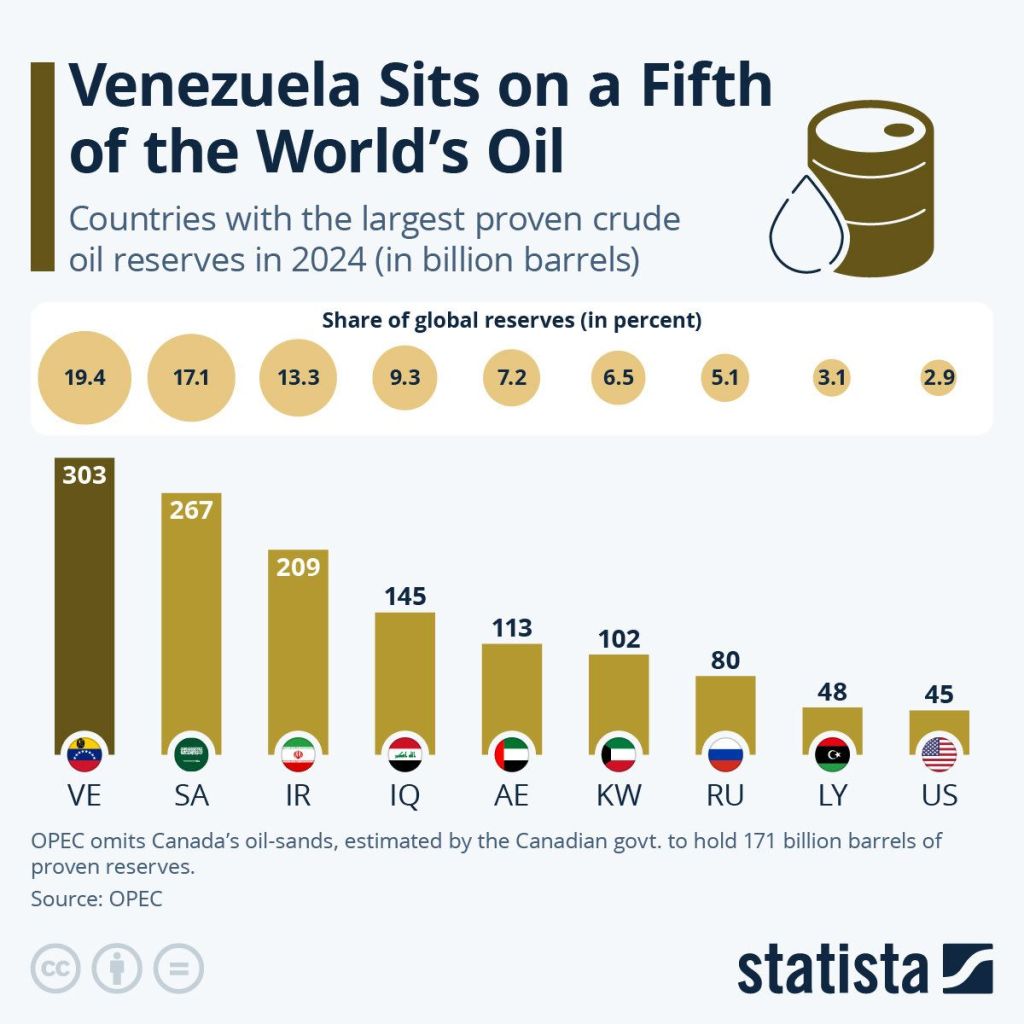
Venezuela matters not because of its politics, but because of its oil. The country holds the largest proven oil reserves in the world, roughly 300 billion barrels. For much of the past decade, China became Venezuela’s most important oil customer, purchasing crude at discounted rates and providing loans repaid in barrels. These shipments helped Caracas survive sanctions and gave Beijing something increasingly valuable: a reliable, low-cost energy source in the Western Hemisphere, largely outside U.S. influence.
Recent U.S. moves to reassert leverage over Venezuela’s oil sector therefore represent more than a bilateral policy shift. They signal an effort to pull a critical energy node back into Washington’s orbit — and, in doing so, to narrow China’s options.
Energy Power Is About Leverage, Not Volume
In strict numerical terms, Venezuelan oil accounts for only a small share of China’s total imports. But energy security is not about any single supplier; it is about diversification and resilience. Every barrel sourced from Venezuela is one that does not have to transit the Middle East or pass through vulnerable maritime chokepoints.
By weakening China’s access to Venezuelan crude, the United States does not cripple Beijing overnight. Instead, it nudges China back toward heavier dependence on regions and routes where Washington already holds disproportionate influence. Over time, that dependence compounds risk.
Energy power, in other words, is less about how much oil you control than about who feels pressure when disruption occurs.
Supply Means Little Without Transit
Oil is only as valuable as the routes that carry it. Here, geography does much of the strategic work.
Roughly one-fifth of the world’s oil passes through the Strait of Hormuz, and most of that oil is bound for Asia. China, Japan, and South Korea are the primary consumers. Any credible threat to Hormuz — whether from Iranian action or regional conflict — immediately spikes insurance costs, delays shipments, and injects uncertainty into Asian economies.
The United States does not need to close Hormuz to benefit from its vulnerability. The mere possibility of disruption acts as a pressure lever. China, by contrast, has limited ability to mitigate such a shock.
Further west, the Bab al-Mandab Strait forms another strategic chokepoint. Connecting the Red Sea to the Indian Ocean, it is essential for energy flows between the Middle East, Europe, and Asia. Conflict in Yemen has already demonstrated how fragile this route is; attacks on shipping have forced vessels to reroute around Africa, adding weeks and significant costs to global trade.
Taken together, Hormuz and Bab al-Mandab form a strategic vise. One threatens the source of Gulf energy; the other threatens its delivery. Both disproportionately affect import-dependent Asian economies — and particularly China.
Africa: The Quiet Contest
Beyond chokepoints, energy competition increasingly plays out across Africa.
China has invested heavily in African oil producers, ports, and infrastructure, including in Nigeria, the continent’s largest crude producer. Nigerian oil exports average over a million barrels per day and sit astride key Atlantic trade routes. Chinese firms finance ports and pipelines, but Western influence still shapes much of the surrounding ecosystem: security cooperation, maritime insurance, regulatory frameworks, and access to dollar-denominated markets.
This pattern repeats elsewhere. China builds physical infrastructure; the West often retains influence over the rules, financing, and security conditions that determine how energy actually moves. Control does not require ownership — only leverage at key points in the chain.
Asymmetry Is the Real Weapon
The strategic imbalance at the heart of this contest is simple.
The United States is now one of the world’s largest oil producers. It is relatively insulated from supply shocks that would severely damage import-dependent economies. China, by contrast, imports roughly 70 percent of its oil, much of it from regions vulnerable to geopolitical disruption.
This asymmetry creates freedom of action for Washington and constraint for Beijing.
If Hormuz closes, China’s economy slows.
If Bab al-Mandab destabilizes, shipping costs rise sharply for Asian trade.
If Venezuelan oil is redirected, China’s diversification strategy weakens.
The United States does not need to replace China as the buyer of every barrel. It only needs to increase friction — higher costs, longer routes, greater uncertainty. Over time, those pressures shape investment decisions, growth rates, and strategic behavior.
Venezuela as Proof of Concept
Seen in this context, Venezuela is not the centerpiece of U.S. strategy, but a test case.
It tests whether Washington can reclaim influence over an energy supplier that had drifted into China’s orbit. It tests whether this can be done incrementally, through market access and sanctions relief, rather than overt confrontation. And it tests how Beijing responds when diversification options quietly narrow.
If successful, the model is scalable. Similar dynamics can apply to other producers, transit hubs, and financing arrangements. The goal is not domination, but structural advantage.
Conclusion
This is not a new kind of power politics. It is a classic one, updated for a globalized economy.
Control the supply, control the transit, and you shape the system.
Control the system, and you influence outcomes without firing a shot.
Venezuela is not about Maduro. It is about energy, leverage, and the quiet mechanics of economic power. And it is unlikely to be the last place where this strategy is tested.
Venezuela is just the beginning.
Khaled Eibid
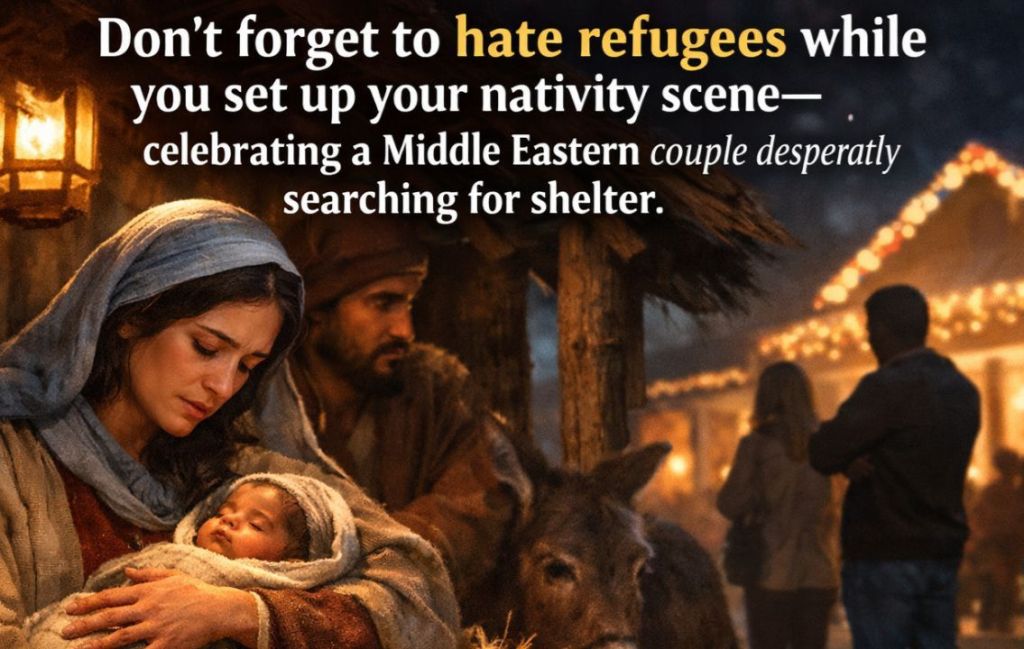
Nativity Refugees vs. GOP Border Walls: Christmas Hypocrisy Exposed
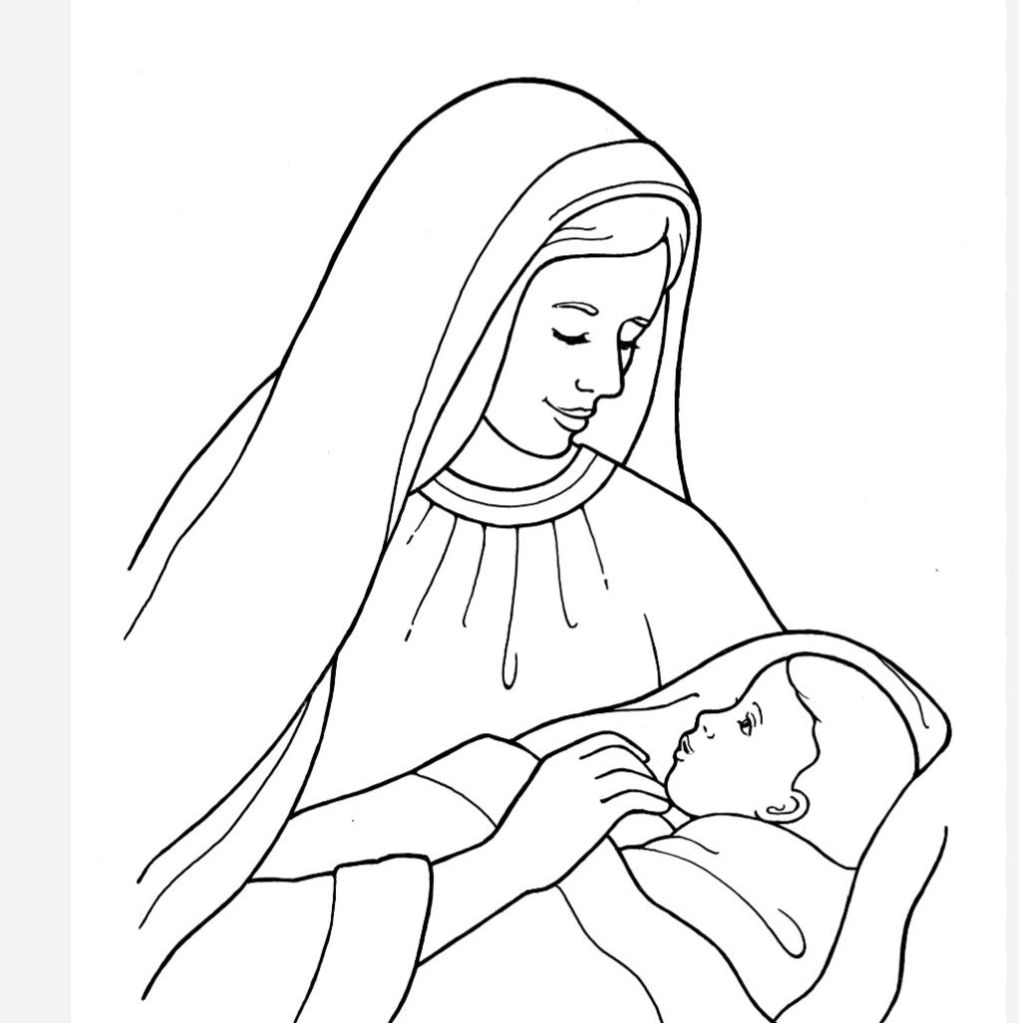
As nativity scenes glow across America this Christmas—tiny Middle Eastern refugees huddled in a manger—Republican leaders who venerate this holy family are slamming the door on real refugees fleeing the same kind of peril today. It’s a glaring hypocrisy: celebrating Mary, Joseph, and baby Jesus’s desperate flight to Egypt for safety (Matthew 2:13–15), while championing policies that suspend U.S. refugee admissions and slash caps to historic lows.This moral disconnect demands scrutiny.
GOP Refugee Policies ExposedRecent Trump administration actions have paused the refugee program for most applicants, deeming admissions “detrimental” unless they serve narrow “national interests.”Admissions are now funneled to select groups, effectively barring Afghans and others from war zones amid internal GOP divisions on the issue.
The Hypocrisy ChargePoliticians courting Christian voters honor a Nativity tale of displacement and divine mercy, yet back measures shutting out modern equivalents—families at borders enduring violence and uncertainty. Polls reveal most Americans favor resettlement, highlighting how these policies prioritize politics over the compassion central to the Christmas story.
Bridging Story and RealityTrue Nativity reverence means embodying its call to shelter the vulnerable, not just staging scenes while endorsing barriers. This tension challenges believers: align policy with the manger’s message, or own the gap between rhetoric and action.
The US still has no universal healthcare because racism won.
Here’s the longer historical explanation, going back step by step, showing how race shaped the U.S. healthcare system and why universal healthcare repeatedly failed.
1. Slavery & Early Medicine (1700s–1800s)
From the start, healthcare in the U.S. was racially stratified.
Enslaved Black people were treated as property, not patients. Medical care existed mainly to preserve labor value, not wellbeing.
White doctors often experimented on enslaved people without consent. This helped advance U.S. medicine while denying Black people autonomy or humane care.
There was no concept of shared public responsibility for health—care was individual, private, or tied to ownership.
This laid an early foundation: healthcare was not a universal right.
2. Reconstruction & Jim Crow (late 1800s–early 1900s)
After slavery ended, the question became: Would the state provide care equally?
Reconstruction-era efforts to create public hospitals and welfare systems were violently resisted in the South.
When federal troops withdrew, Southern states built segregated healthcare systems:
Underfunded “Black hospitals”
Limited access to medical schools for Black doctors
White political leaders argued that public health programs would force racial equality.
The idea that government-provided care = racial integration became politically toxic.
3. Progressive Era & Early National Health Insurance (1900–1930s)
The U.S. almost adopted universal healthcare during this period.
Reformers proposed national health insurance similar to Germany’s system.
These proposals were attacked as:
“Socialist”
A threat to white workers being “forced” to support Black people
Southern lawmakers opposed any program that:
Could not be locally controlled
Might undermine segregation
As a result, national plans died. The U.S. instead moved toward private, employer-based solutions.
4. The New Deal (1930s)
This is a critical moment.
FDR needed Southern Democrats to pass New Deal legislation.
To secure their votes, key programs excluded occupations heavily held by Black workers, such as:
Agricultural labor
Domestic work
National health insurance was removed entirely from the Social Security Act because:
It threatened segregated hospitals
Southern lawmakers feared federal enforcement of equality
So the New Deal expanded welfare—but deliberately avoided universal healthcare.
5. World War II & Employer-Based Insurance
This is where today’s system really took shape.
Wartime wage controls led employers to offer health insurance as a benefit.
These benefits mostly went to white, unionized workers.
Black workers, often excluded from unions and good jobs, were left out.
Healthcare became tied to employment—not citizenship—locking in inequality.
6. Civil Rights Era & Medicare/Medicaid (1960s)
Universal healthcare was still blocked, but partial programs passed.
Medicare and Medicaid were compromises:
Medicare: elderly (seen as “deserving”)
Medicaid: poor (racialized and stigmatized)
Hospitals were finally desegregated only because Medicare funding required it.
Even then, Medicaid was designed to be:
State-controlled
Uneven
Easy to restrict
This preserved racial and regional disparities instead of eliminating them.
7. Late 20th Century to Today
By the time race-based exclusions were openly challenged:
The system was already fragmented
Private insurers had enormous power
Universal care was framed as:
Helping “others”
Encouraging dependency
Taking from “hardworking taxpayers”
Racial resentment—often coded rather than explicit—remained a powerful political force.
The Result
Because of these choices:
The U.S. never built healthcare as a shared public good
Other Western nations did
The U.S. pays more for worse outcomes
Everyone suffers, but marginalized groups suffer most
This isn’t accidental. It’s the long-term consequence of repeatedly choosing exclusion over universality.
If you want next, I can:
Show quotes from lawmakers at the time
Compare this directly to how the UK or Canada avoided this path
Or explain how racial politics still show up in healthcare debates today
Why Doesn’t El-Sisi Leave?
Why Doesn’t El-Sisi Leave?
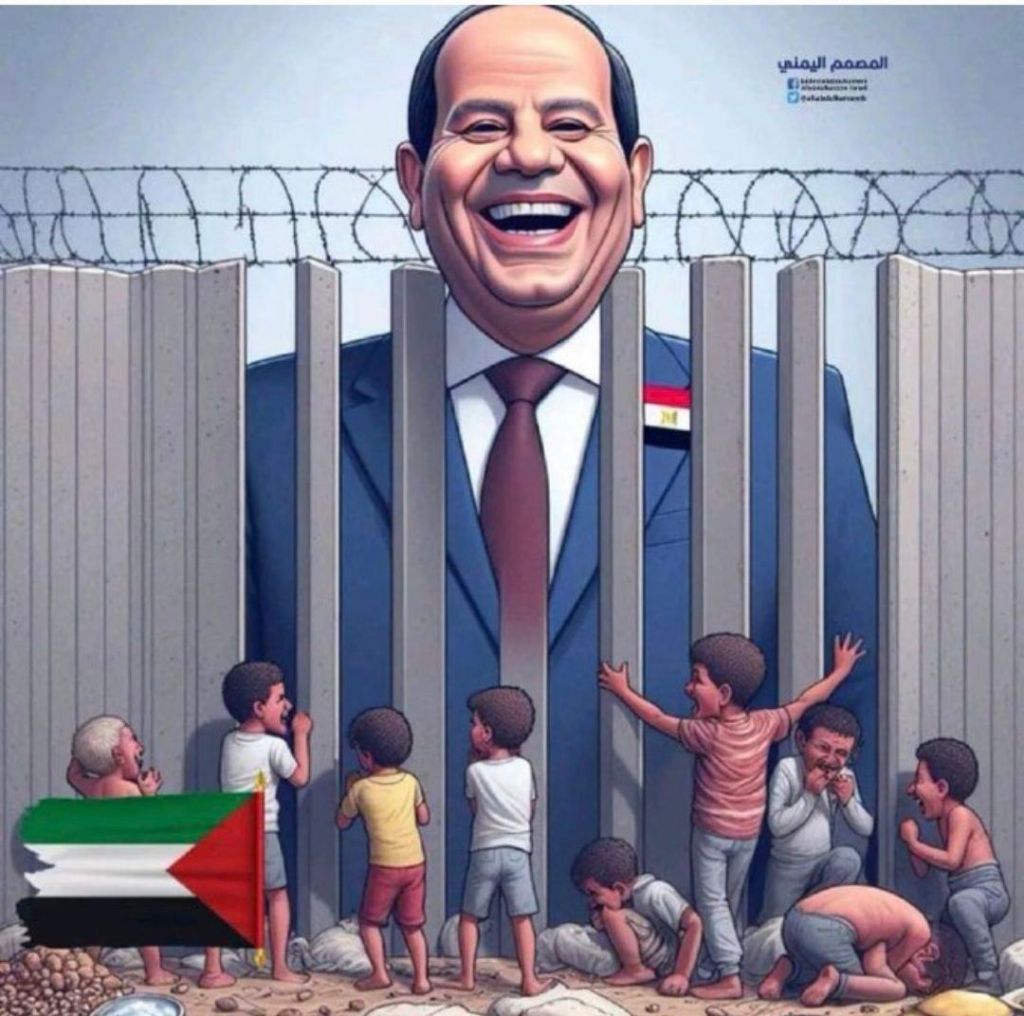
There seems to be no limit to the greed for power. Every time a tyrannical ruler achieves what he seeks and reaches his goals, he immediately craves even greater power — not to serve his people, but to fulfill his own ambitions and personal glory. The legitimate path to leadership never grants anyone absolute authority.
An animal kills only when it is hungry and needs to survive. But a tyrant kills indiscriminately — ordering executions, building prisons, enforcing forced disappearances, holding military trials for civilians to ensure they remain behind bars without appeal, and arresting innocent people randomly in cafés, on the streets, and on public transport. These are the tools of oppression used by the tyrant to secure and expand his throne.
The more he oppresses, the more sins, injustices, and crimes he commits. His path to power is paved with seas of blood, lost souls, and assaults on the dignity of human beings — beings whose rights he refuses to recognize, whom he does not even see as human, though God has honored them above all creation.
When people demand that such a ruler respect human rights, he reacts with madness and disbelief. He may appear in human form, but he is devoid of humanity — heartless, despised, corrupt in name and reputation, and rejected by all.
You might ask yourself: Is such a person even real? Why not? Do we not read in the news of fathers killing their own sons or daughters — their own flesh and blood? Mercy has been stripped from the hearts of tyrants, which is why their nations suffer so long under poverty, oppression, and fear.
Once, the police were known as the Rescue and Relief Force — there to help any citizen in distress. But under tyranny, they have become an instrument of repression and torture, a shield to protect the dictator. The police have changed from serving the people to oppressing and humiliating them — from a service institution to a repressive one that exists only to defend the ruler and his regime, not to aid the people.
Under this despot, much of what Egypt once held dear has been destroyed. After Islam abolished slavery, they insist on dragging us back to the age of ignorance — imposing slavery, torture, and exclusion, while hypocritically preaching about a “renewed religious discourse.” Their actions, however, are steeped in barbarism, hatred, and hostility.
They seek to ignite war among the sons of this nation so they can continue their tyranny and destruction of everything beautiful in this homeland — all to preserve their own power, families, and cronies. Meanwhile, the rights of ordinary Egyptians are cast into the fire. The citizen is stripped of his rights, forbidden to think, share opinions, or participate in decision-making.
Only they are allowed to think — and the people, the “slaves,” must listen and obey. Otherwise, woe to the citizen, his family, and his children. Anyone who dares to oppose them or question their authority is crushed. They have declared it openly: they are the masters, and the people are the slaves.
And so the injustices multiply. Wealth and power are handed down among their children and loyalists. This will continue until the people awaken, rise up against the tyrant and the corrupt system, and reclaim their freedom, dignity, and social justice.
Bread. Freedom. Social Justice.
Few years after I wrote this article on April 23, 2016, and El-Sisi’s secret police arrested my older brother in Egypt to silence me and stop me from writing while I was living abroad.
Khaled Eibid
#FreeDrHussamAbuSafiya
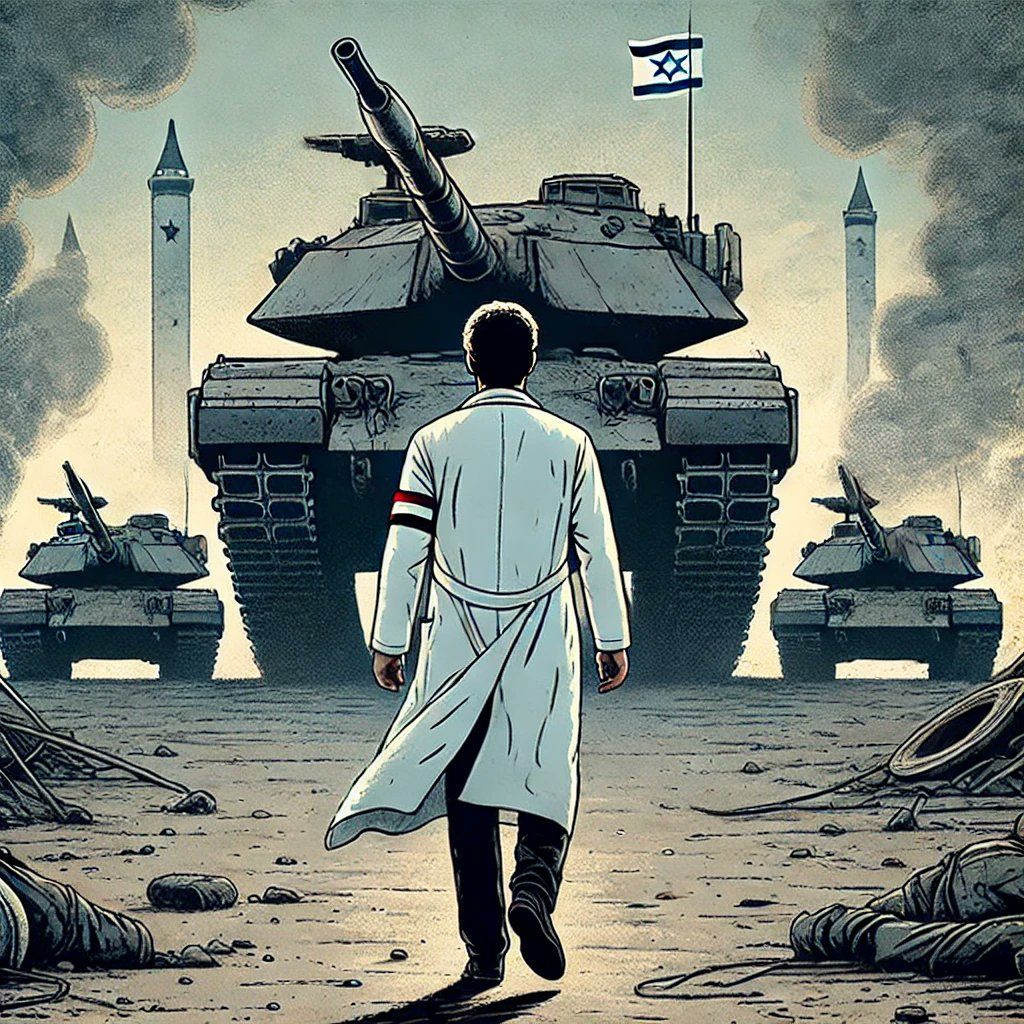
Dr. Hussam Abu Safiya has been arbitrarily detained for over 6 months by Israeli authorities. Multiple sources reported that Dr. Abu Safiya and other Palestinian detainees have been subjected to abuse and other ill-treatment. It also was reported that he has been denied access to healthcare and that he lost a lot of weight due to poor detention conditions and depriving him of food and nutrition.
#FreeDrHussamAbuSafiya
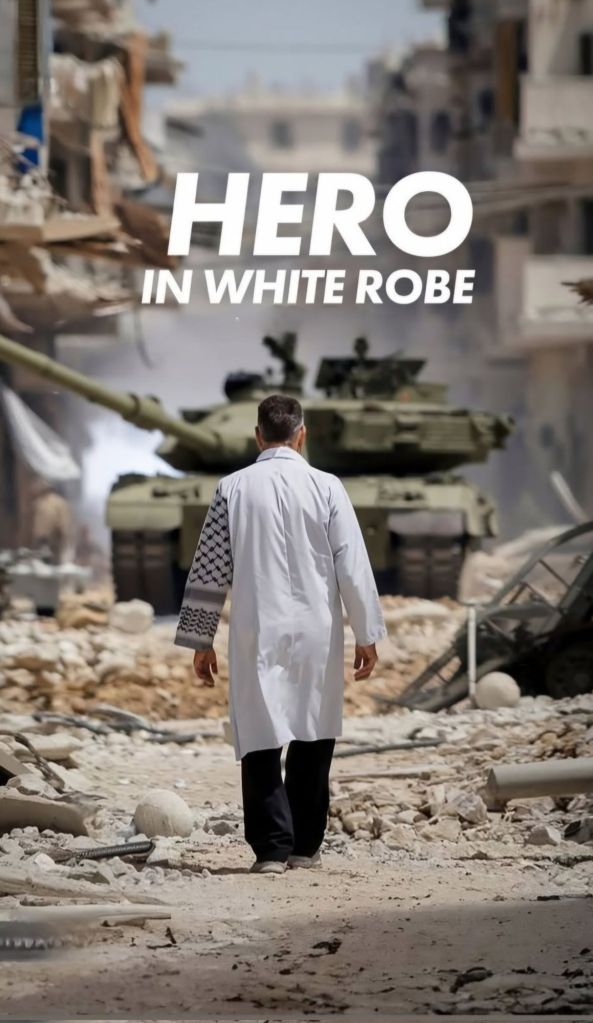
Malcom X and Gaza Genocide
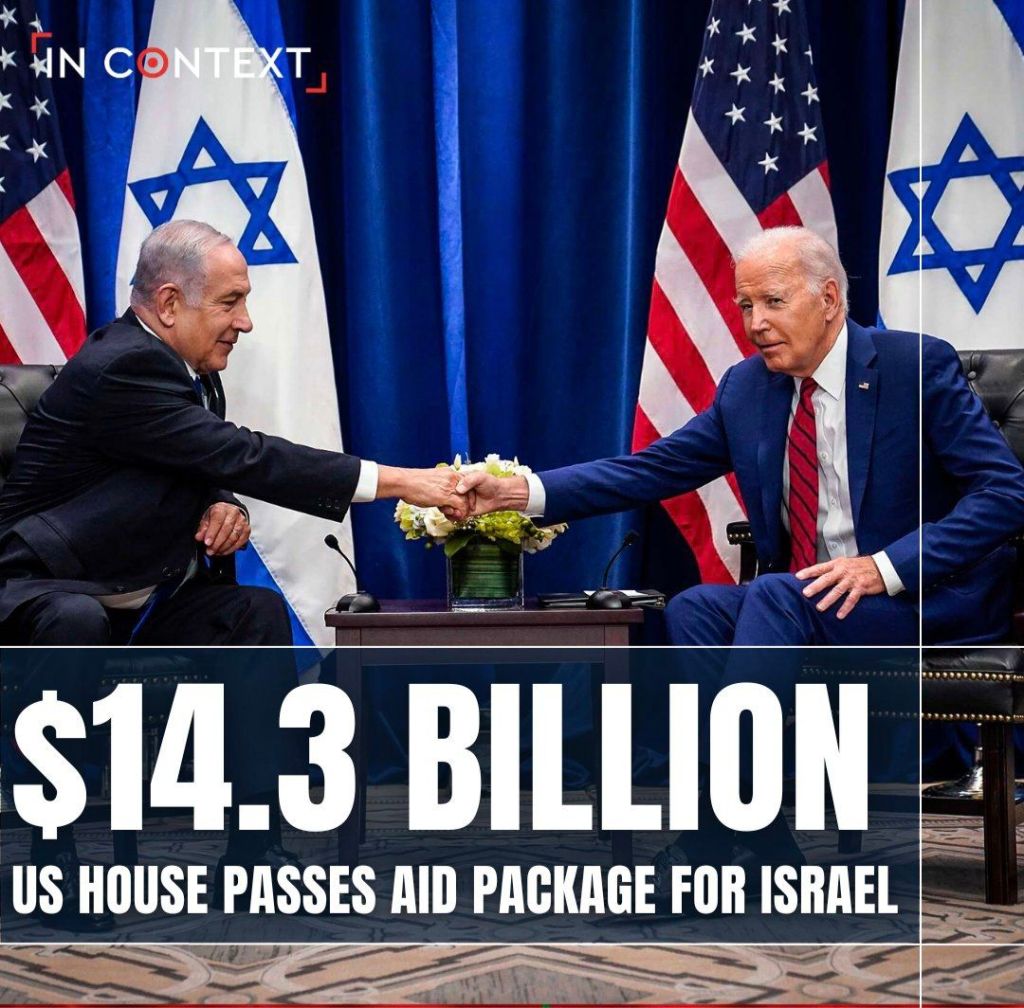
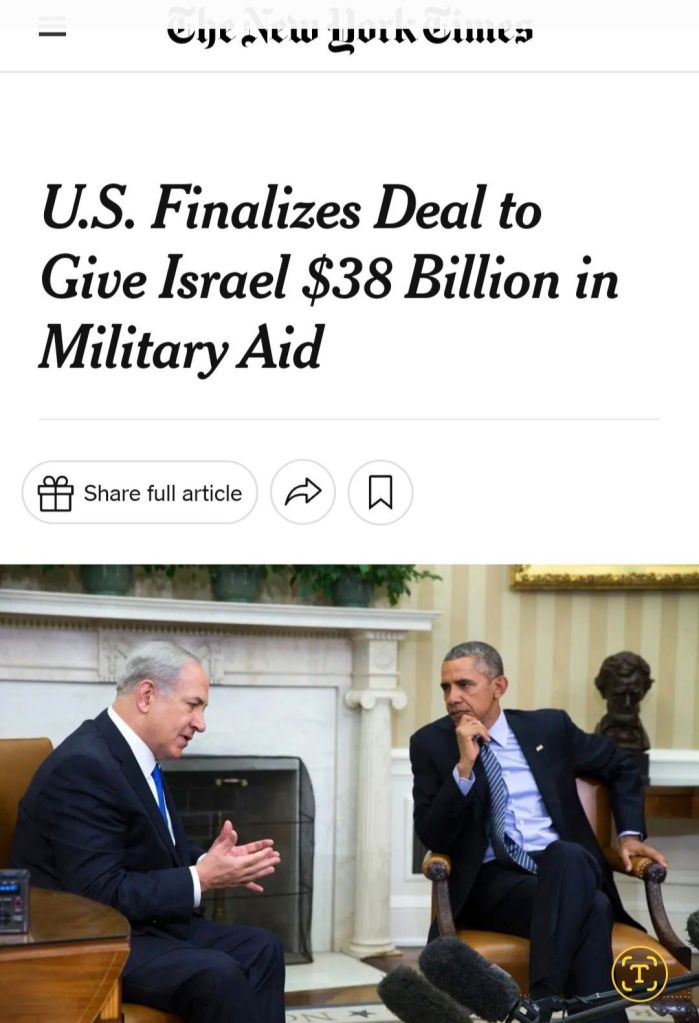
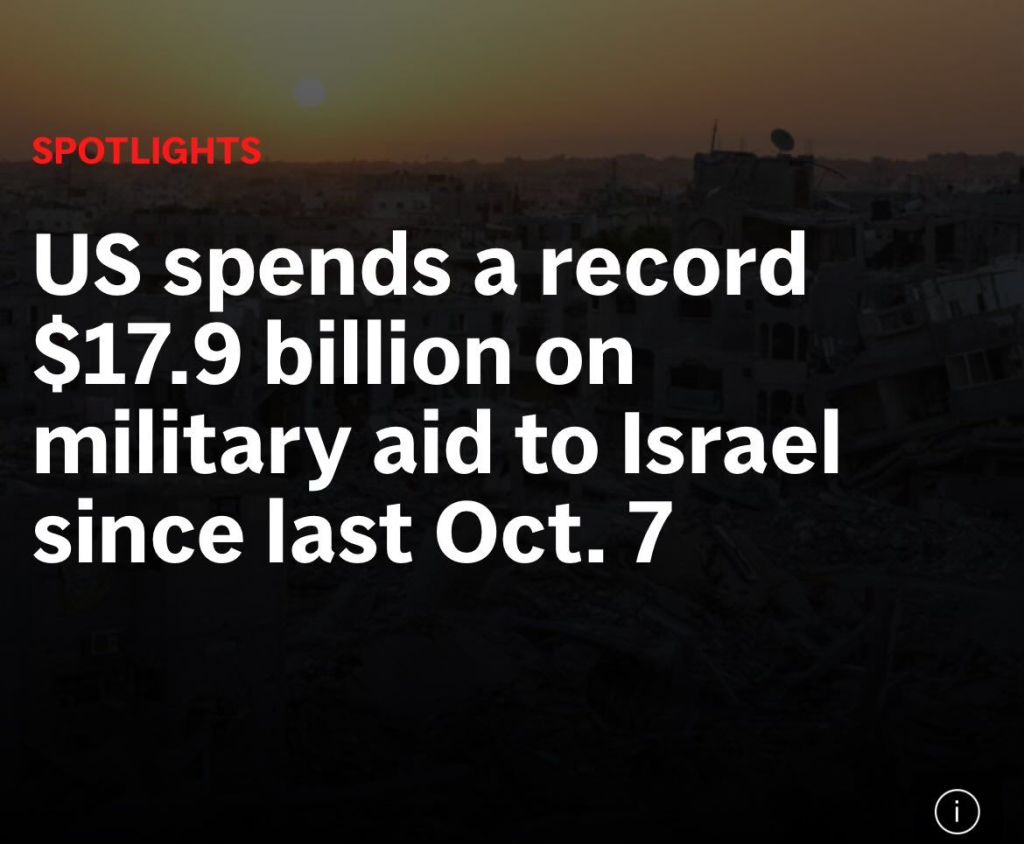
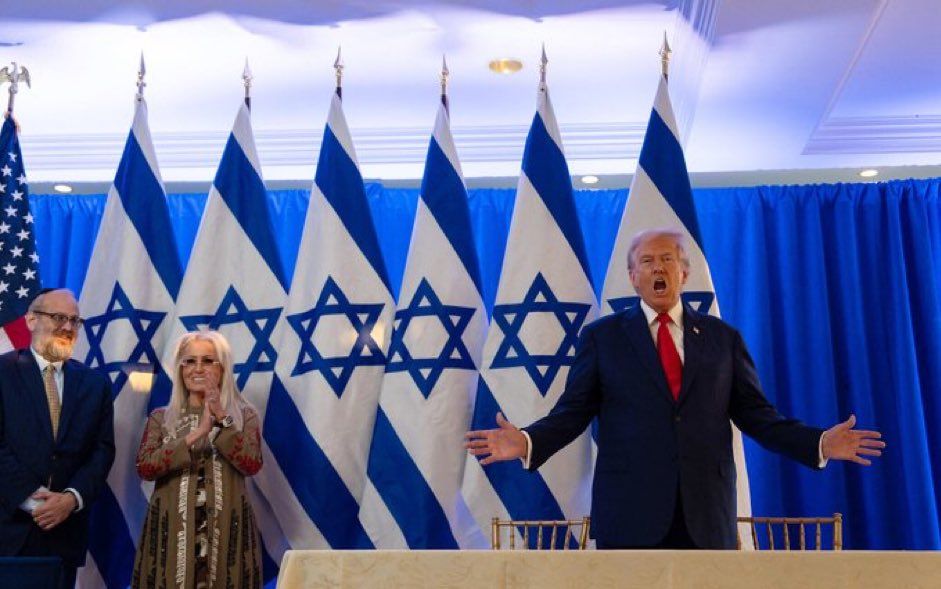
Malcom X in 1964:
The problem that exists in Palestine is not a religious problem… It is a question of colonialism. It is a question of a people who are being deprived of their homeland.
كيف دمر الديكتاتور السيسي الاقتصاد المصري؟!
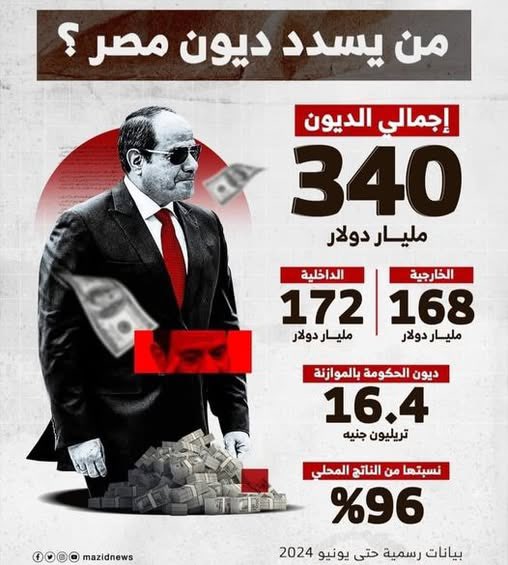
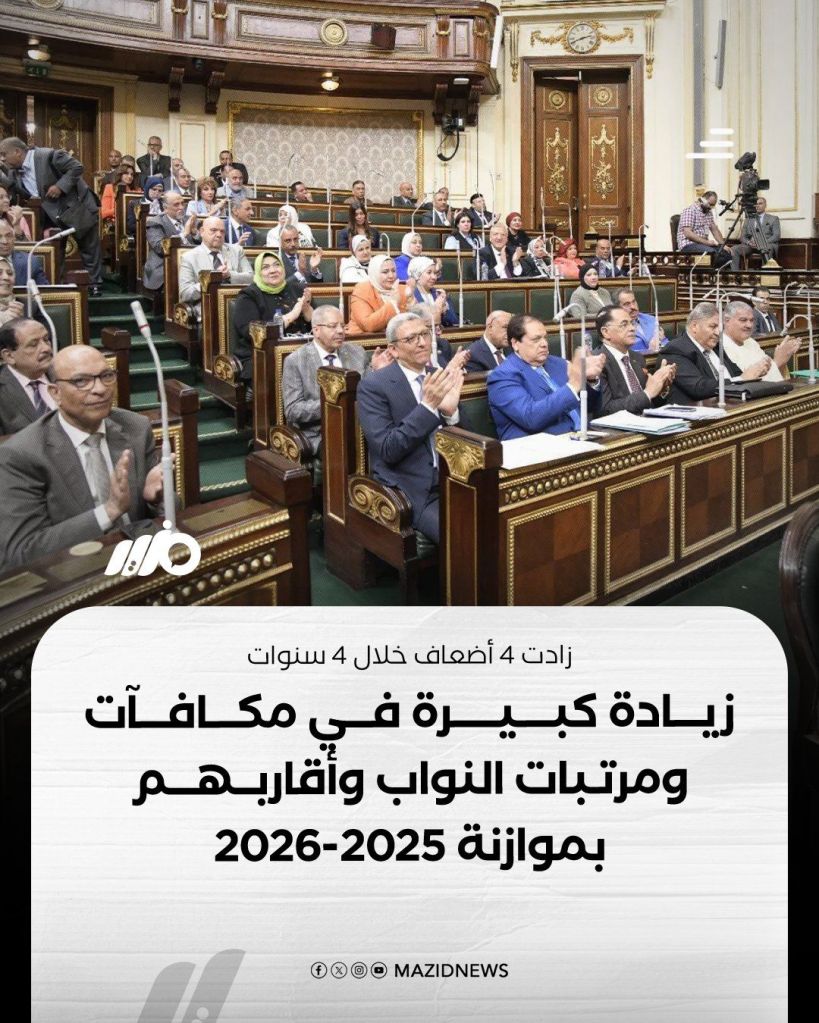
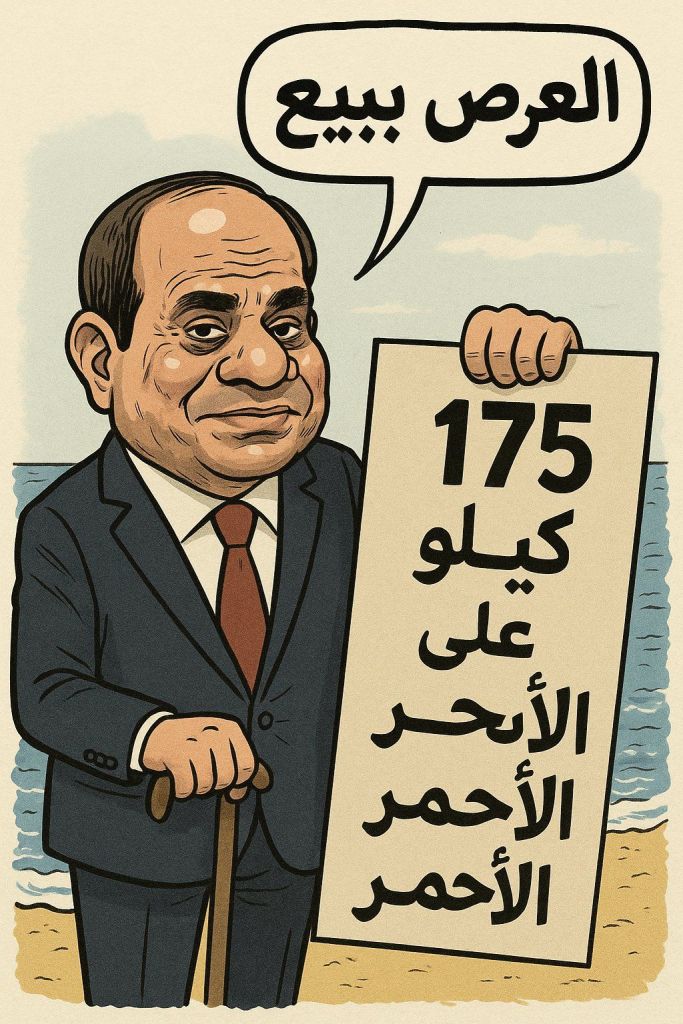
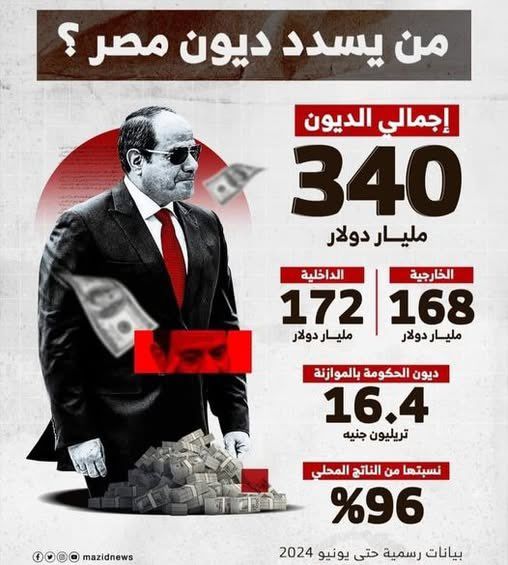


إليك نظرة دقيقة وموثقة حول الديون الخارجية لمصر في عهد الرئيس عبد الفتاح السيسي (2014 إلى منتصف 2025)، مع استناد لمصادر رسمية وتقارير خبراء:
—
تطور حجم الدين الخارجي
عند تولي السيسي الرئاسة منتصف 2014، كانت الديون الخارجية حوالي 46 مليار دولار .
بحلول نهاية يونيو 2021 ارتفعت إلى نحو 137 مليار دولار، أي ما يقارب 3 أضعاف ما كانت عليه عند بدء حكمه .
إلى نهاية 2022، تجاوزت الـ 155 مليار دولار، واستمرت في الارتفاع لتصل إلى 168 مليار دولار في 2023 و165–168 مليار نهاية 2024 .
—
نسب الدين إلى الناتج المحلي
نسبة الدين الخارجي إلى الناتج المحلي كانت حوالى 16% في 2015، ثم ارتفعت تدريجيًا إلى حوالي 32‑33% في 2021‑2022 .
في 2022 بلغت نسبة الدين العام (داخلي وخارجي) نحو 87–89% من الناتج، ووصلت في سنوات سابقة إلى **91.6%** .
—
茶 الاستخدام وأعباء الفوائد
جزء كبير من القروض ذهبت لتمويل مشاريع ضخمة مثل العاصمة الجديدة وخطوط السكك عالية السرعة وغيرها، مع تأثير محدود على النمو الاقتصادي الحقيقي .
خدمات الدين (أقساط وفوائد) أصبحت تستهلك نحو 35‑40% من الإنفاق الحكومي، وبلغت فاتورة سداد الدين الخارجي وحده نحو 42.3 مليار دولار خلال عام 2024، وهو أعلى مستوى تاريخي .
—
مخاطر وتوقعات مستقبلية
بحسب صندوق النقد الدولي (يوليو 2025)، من المتوقع أن يرتفع الدين الخارجي إلى حوالي 202 مليار دولار بحلول 2029/2030، مما يشكل “مخاطر عالية على السيادة الاقتصادية” .
وصفت تقارير مثل “EgyptWatch” وCounterfire النموذج الاقتصادي في عهد السيسي بالحلقة المفرغة: اقتراض مستمر دون مردود يدعم التنمية، مما يهدد بتكرار أزمة اقتصادات كسوريا ولبنان أو سريلانكا .
—
茶 الملخّص (من 2014 إلى منتصف 2025)
التاريخ الدين الخارجي التقديري كنسبة من الناتج المحلي ملاحظات رئيسية
يونيو 2014 (بداية حكم السيسي) ~46 مليار دولار ~15–16% دين محدود قبل عهد السيسي
يونيو 2021 ~137 مليار دولار ~32–33% تضاعف الدين تقريبًا
نهاية 2022–2023 ~155–168 مليار دولار ~32–35% استقرار نسبي لكنه مرتفع
منتصف 2025 ~165–168 مليار دولار ~34% (خارجي فقط) الفوائد ضخمة، الدين مستمر بالارتفاع
توقعات حتى 2029/2030 حتى 202 مليار دولار — يهدد بنوع من الضغط المالي السيادي
—
吝 التقييم العام
تراكم الدين الخارجي بمعدل سريع وغير منتج، حيث لم تُترجم الاستثمارات العامة إلى نمو اقتصادي حقيقي أو تحسين ملموس في شروط المعيشة.
عبء الفوائد يضغط على ميزانية الدولة بحيث تصبح خدمة الدين أحد أبرز أعمدة الإنفاق الحكومي، مما يقلص الإنفاق على الخدمات الاجتماعية والاقتصادية الأساسية.
نمط القروض يفترض مضمون له علاقة بالمشاريع الفخمة أو الرأسمالية العسكرية، وليس بتوسيع الإنتاج الوطني أو دعم القطاع الخاص المستقل، وهذا ما يثير المخاوف من مستقبل اقتصادي هش.
 alexmanhatten