 .
.
Controversial audio recordings were leaked yesterday evening and aired on Egypt’s Mekameleen satellite network. The recordings feature several senior army officers talking amongst themselves and with other top officials to resolve what seemed to be an unanticipated problem.
The recordings begin with General Mamdouh Shahin, legal advisor to the Supreme Council of the Armed Forces (SCAF) in Egypt, speaking on the phone to General Abbas Kamil, Al-Sisi’s office manager, and telling him that he received a warning from the prosecutor general advising him that something needed to be done urgently to avert the collapse of the entire legal case against deposed President Morsi.
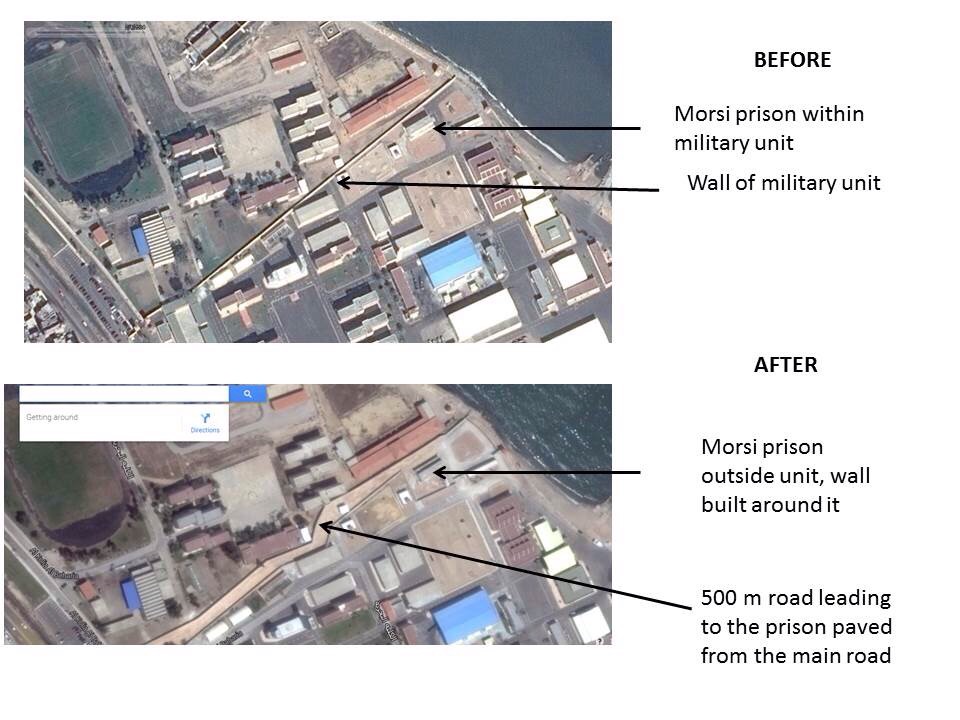
The problem lay with where Morsi was held prior to his transfer to prison. Shahin told Kamil that upon the prosecutor’s advice they needed to change the location where Morsi was held in order that it would be acceptable to the courts as one of the Interior Ministry’s detention centres rather than a military barracks.
According to Egyptian Law, it is unlawful to detain a civilian inside a military barracks for any period of time. The prosecutor warned that Morsi’s lawyers were asking questions that gave the impression they were seeking to benefit from that law to have the case dismissed.
The recordings show the officers claiming they can do anything they want; they are capable of anything including altering not only the shape of both the interior and the exterior of buildings, but also the facts of history. The barracks where Morsi was being held would be commissioned to the army’s engineering corps to redesign them and alter them so they look like a 100-year-old state prison with up to date records to prove that inmates were held there throughout that period.
The officers speak candidly of how falsifying evidence is an art they have mastered more than anyone else and how they would do such an excellent job of fabricating the story that no one would be able to question its authenticity.
Having decided what to do, the officers called the interior minister to tell him about the plan. It is clear that the officers tell the minister what to do and go on to tell other senior civil servants what would be expected of them.
Since the leaked audio recordings were aired on Mekameleen, they were also aired by the London-based Al-Hiwar channel and the Doha-based Al-JazeeraMubasher Misr.
 alexmanhatten